Phoenix’s Recent Rainfall and What it Means for the Spring Allergy Season in Scottsdale
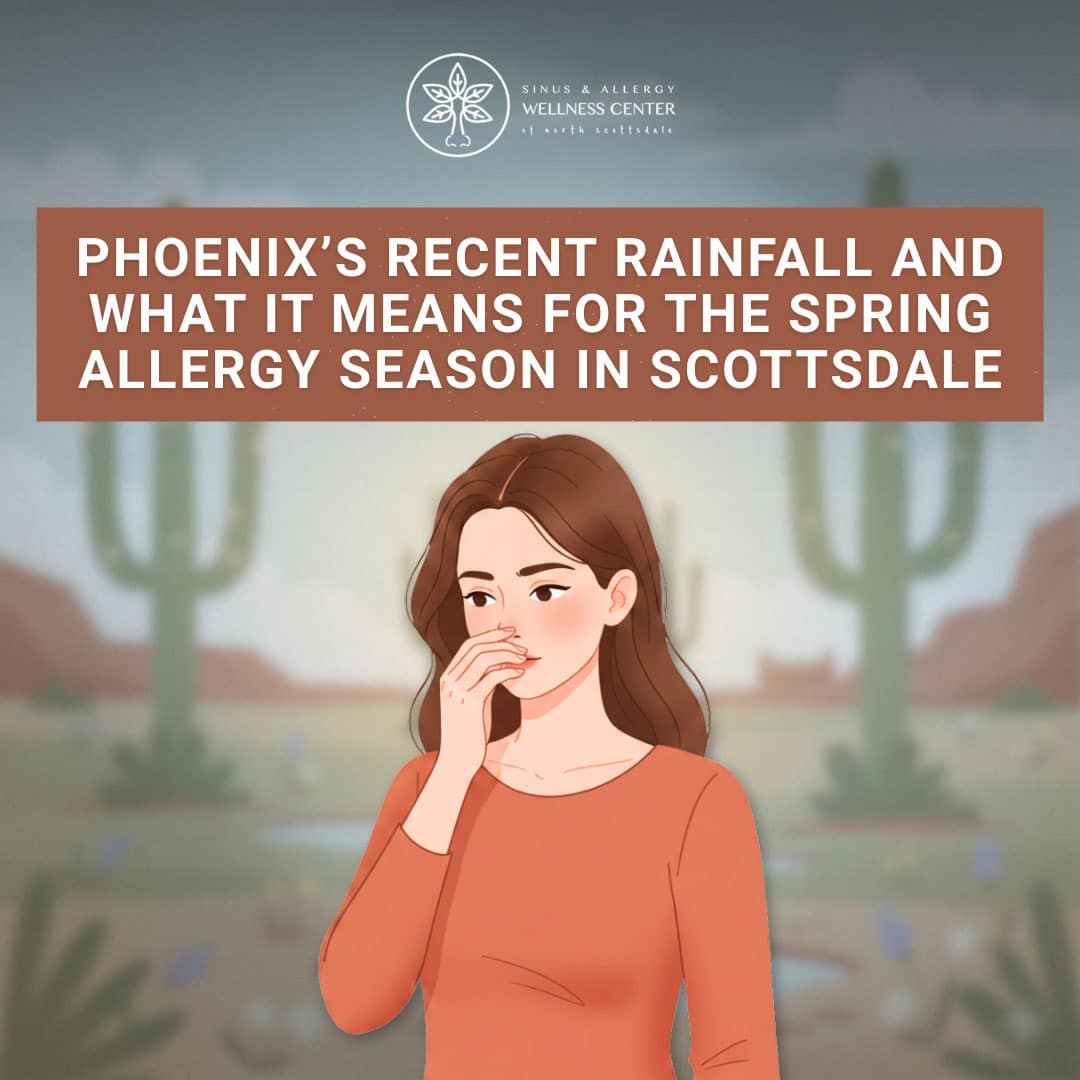
Phoenix recorded the wettest fall ever—and that extra rainfall could lead to a more intense spring allergy season in Scottsdale.
Other than creating challenges for typical desert sports like hiking and other outdoor activities, the rainy season may lead to a tougher spring allergy season ahead.
The Connection Between Heavy Rain and Allergy Season
In desert climates like Arizona, heavier rain fuels plant growth. When temperatures rise, that growth turns into higher pollen levels, often triggering earlier and longer allergy seasons.
ENT specialists in Scottsdale frequently see the following allergy symptoms:
- Increased nasal congestion and sinus pressure
- Postnasal drip and chronic cough
- Fatigue and sleep disruption
- Mold-related allergy symptoms after wet winters
Moist conditions also promote mold growth, another common allergy trigger in the Valley.
Remedies for Allergies from the Sinus and Allergy Center in Scottsdale
Over-the-counter (OTC) medications
OTC medications are widely used to manage allergy symptoms. They are easily accessible and provide quick relief for mild to moderate symptoms.
Antihistamines are the most common OTC allergy medications. They work by blocking histamine, a chemical the immune system releases during an allergic reaction. This can help reduce symptoms like sneezing, itching, and runny nose.
Decongestants can help relieve a stuffy nose, a common symptom of respiratory allergies. Corticosteroid creams or sprays can reduce inflammation and alleviate skin allergies.
Prescription medications
If your allergies are severe or persistent, prescription medications may be needed to help you feel better.
Prescription antihistamines can provide longer-lasting relief than their OTC counterparts. Corticosteroids, available in various forms, can reduce inflammation caused by allergies. They can be used for skin, respiratory, and severe food allergies.
Other prescription drugs target specific allergy symptoms. For example, leukotriene modifiers can help manage asthma symptoms associated with allergies, and nasal ipratropium can relieve a runny nose caused by allergies.
Immunotherapy
Allergy immunotherapy is a treatment approach that aims to desensitize the immune system to allergens. It involves exposing the body to small doses of an allergen over time, which can help reduce the severity of allergic reactions.
Sublingual immunotherapy (SLIT) is another method of immunotherapy that involves placing drops under the tongue, which contains small amounts of an allergen and is allowed to dissolve.
Immunotherapy may help reduce symptoms for certain environmental allergies like pollen or dust mites. Some forms are being explored for insect stings or food allergies under specialized care or in research settings.
What Scottsdale Allergy Patients Can Do Now
Be sure to follow the below lifestyle tips in order to manage and prevent allergies:
- Close doors and windows at night.
- Keep an eye on the weather forecast. Always check local TV, news sites, and radio stations for the latest pollen levels and allergy alerts.
- Start your preventative care early before the spring allergies pop up.
Q&A Recap
Q: Does more rain in Phoenix make allergies worse in Scottsdale?
A: Yes. Increased rainfall leads to more plant growth, which can result in higher pollen levels during spring. This often means more severe allergy symptoms for Scottsdale residents.
Q: Can a wet winter cause worse spring allergies?
A: Yes, wetter winters can contribute to more plant growth, which may increase pollen levels in the spring, potentially worsening allergy symptoms for some individuals.
Q: When should I see an ENT for seasonal allergies?
A: If symptoms last longer than a few weeks, disrupt sleep, or don’t improve with over-the-counter medications, it’s a good time to see an ENT in Scottsdale.
Q: Can mold allergies increase after heavy rainfall?
A: Yes. Moist conditions can promote mold growth, which is a common allergy trigger in Arizona.
Scottsdale Allergy Care
At Sinus & Allergy Wellness Center, our team of experts is well-versed in diagnosing and managing allergies; we use diagnostic tools such as nasal endoscopy and allergy testing to guide personalized treatment plans. Reach out to us today for an early evaluation to help reduce symptoms before pollen counts spike.
Disclaimer:
The information provided in this article is for informational and educational purposes only and does not constitute medical advice. It is not intended to diagnose, treat, cure, or prevent any disease or medical condition. Always seek the guidance of your physician or other qualified healthcare provider with any questions you may have regarding a medical condition or treatment.
Results may vary: Treatment outcomes and health experiences may differ based on individual medical history, condition severity, and response to care.
Emergency Notice: If you are experiencing a medical emergency, call 911 or seek immediate medical attention.