
Holistic Approaches to Chronic Sinusitis
Medications and procedures are tools. So is everything on this page. The difference is you can start these today — no appointment required.
Chronic sinusitis is an inflammatory disease. That means every decision we make — surgical or not — is ultimately aimed at one goal: reducing the inflammatory burden on the nasal and sinus mucosa and keeping it reduced long enough for the tissue to heal and stabilize. Procedures open pathways. Medications calm the lining. But the lifestyle choices that surround those interventions determine whether the results hold.
Everything on this page I either recommend to my patients directly or use myself. None of it replaces a proper evaluation when one is needed. All of it makes a meaningful difference.
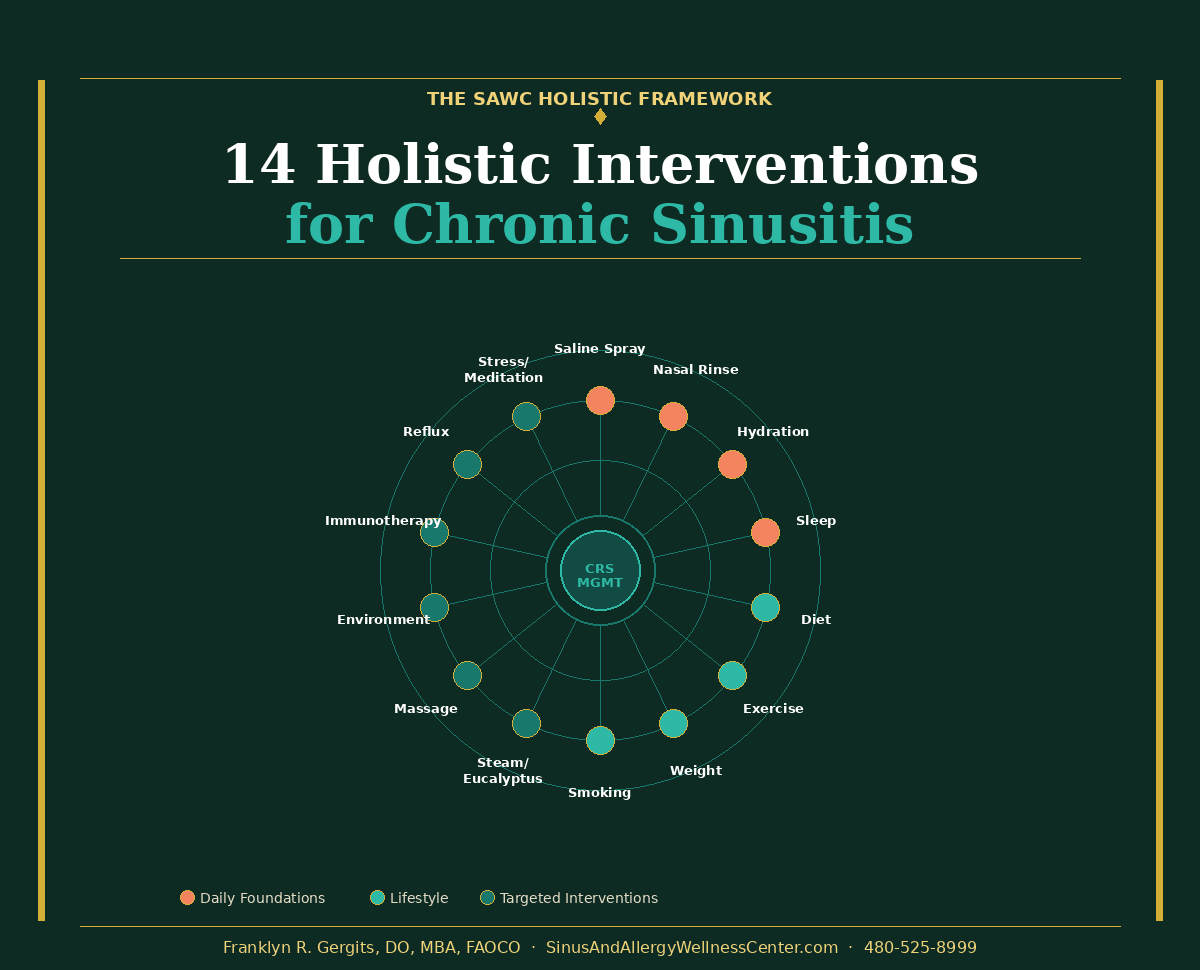
The diagram below maps all fourteen holistic interventions across three tiers — daily foundations that keep the inflammatory burden low, lifestyle changes that address the systemic drivers, and targeted interventions aimed at specific upstream contributors. This is the complete picture before we go through each one in detail.
1. Saline Nasal Spray — The Foundation
Before any other intervention, start here. Saline nasal spray used consistently — one to two sprays in each nostril every one to two hours while awake — physically removes allergens, pollutants, and irritants from the nasal mucosa before they have time to trigger the immune system. This is not treating symptoms. It is preventing them.
Most patients use saline spray reactively, when congestion is already present. That is backwards. The goal is to keep the mucosal surface clean before the inflammatory cascade begins. Year-round, daily, consistently.
2. Saline Nasal Rinse
Twice daily nasal rinse with distilled or previously boiled water irrigates the nasal passages, clears accumulated debris and biofilm, and supports mucociliary clearance. Anchor the habit to teeth brushing: rinse the nose first, then brush. Done morning and night without thinking about it.
Critical safety note: Never use tap water directly from the faucet for nasal rinsing. Distilled water or water that has been boiled and fully cooled only. Naegleria fowleri — a microscopic waterborne amoeba — can reach the nasal cavity through non-sterile water in patients with inflamed mucosal tissue. The risk is small. The consequence is catastrophic. Distilled water costs less than a dollar per gallon.
3. Steam Inhalation With Eucalyptus Oil
Fill a bowl with hot water. Add two to three drops of eucalyptus essential oil. Drape a towel over your head and the bowl. Inhale slowly through your nose for five to ten minutes.
The steam humidifies and soothes the inflamed mucosa. The active compound — 1,8-cineole — has documented anti-inflammatory, mucolytic, and antimicrobial properties that thin mucus, reduce sinus pressure, and support mucosal healing. This is not aromatherapy. It is a pharmacologically active compound delivered directly to the target tissue.
Use once or twice daily during symptomatic periods. Avoid in young children. Never use tea tree oil as a substitute — it is toxic to nasal mucosal tissue.
4. Hydration — The Formula
Take your body weight in pounds. Divide by two. That number in fluid ounces is your daily baseline water target. In Arizona add more. Exercising add more. Spending time outdoors in heat add more.
Dehydration thickens mucus, impairs mucociliary clearance, and makes the mucosal lining more vulnerable to both inflammation and infection. Adequate hydration is the single cheapest intervention on this entire list — and chronic sinusitis patients are almost universally under-hydrated.
5. Anti-Inflammatory Diet
Diet either feeds chronic inflammation or helps resolve it. Foods that consistently reduce systemic inflammation include fatty fish high in omega-3 fatty acids, leafy greens, berries, olive oil, turmeric, ginger, and foods rich in vitamin C. Foods that consistently amplify it include refined sugar, processed foods, trans fats, and alcohol.
Alcohol deserves specific mention — it is a direct nasal vasodilator that worsens congestion, promotes gastroesophageal reflux that reaches the posterior nasal mucosa, and disrupts sleep architecture. Patients who reduce alcohol consistently report meaningful improvement in sinus symptoms independent of any other intervention.
Gluten sensitivity and dairy sensitivity are worth evaluating in patients who have not responded to other interventions. Clinical testing before dietary elimination — not guesswork.
6. Exercise and Lymphatic Movement
The lymphatic system does not have its own pump. It moves when muscles move. Exercise — even a 20-minute daily walk — activates lymphatic circulation, moves inflammatory byproducts out of tissue, and supports the immune clearance doing the work of resolving chronic mucosal inflammation. Patients who begin consistent moderate exercise report meaningful improvement in sinus symptoms over time. This is lymphatic physiology at work. Move every day.
7. Facial and Sinus Massage
Regular facial massage targeting the lymphatic drainage pathways of the face and neck reduces the fluid congestion and inflammatory load accumulating in the sinonasal tissues. The technique follows the lymphatic drainage pattern: starting at the base of the neck, moving upward along the sides of the neck, then the cheeks, beside the nose, the forehead, and the temples.
Use two to three drops of eucalyptus essential oil mixed into one teaspoon of fractionated coconut oil as a massage medium. This delivers the anti-inflammatory benefits of 1,8-cineole through the skin while the massage activates lymphatic drainage. Five to eight minutes daily, consistently.
8. Weight Management
Excess body weight contributes to chronic sinusitis through increased systemic inflammatory markers, increased gastroesophageal reflux — a direct upstream driver of posterior nasal inflammation through pepsin deposition — and narrowing of the upper airway that worsens sleep-disordered breathing. Weight loss through dietary modification, exercise, and where appropriate GLP-1 receptor agonist therapy is one of the most powerful upstream interventions available. The benefits are directly relevant to the airway — not just general health.
9. Smoking Cessation — Non-Negotiable
Cigarette smoke damages the cilia responsible for mucociliary clearance, promotes chronic inflammation in the sinonasal mucosa, increases susceptibility to bacterial biofilm formation, and dramatically worsens every form of chronic airway disease. There is no dose of cigarette smoke compatible with a healthy sinonasal mucosa.
Every patient who smokes and has chronic sinusitis is managing a disease with one hand while actively worsening it with the other. Smoking cessation is the single most impactful intervention available for this patient population — more impactful than any medication or procedure we can offer while the patient continues to smoke.
Arizona resource: Arizona Smokers' Helpline — 1-800-556-6222. Free counseling and support.
10. Sleep Optimization
Sleep is when the body resolves inflammation. Mucociliary clearance is most active during sleep. Disrupted or inadequate sleep actively undermines every other holistic intervention on this list.
Specific protocol: elevate the head with a wedge pillow or mattress wedge to reduce nasal congestion and reflux. Use a cool-mist humidifier in the bedroom at 40 to 50% relative humidity. Rinse the nose before bed. Apply nasal steroid spray after the evening rinse. Avoid alcohol, caffeine after noon, and large meals within three hours of sleep. For sleep disruption compounded by anxiety about breathing, use the Insight Timer app — free, guided sleep meditations, and genuinely effective.
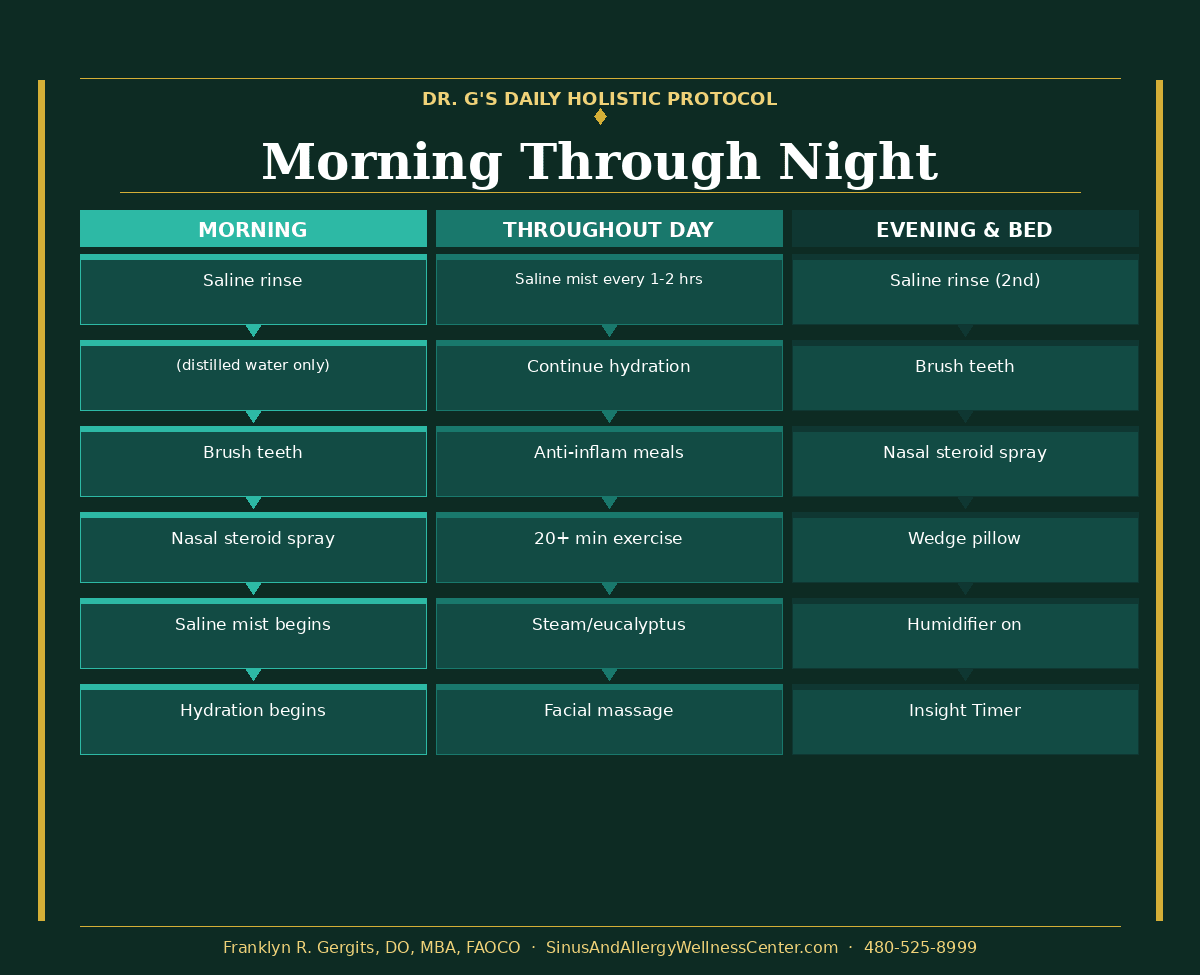
Knowing what to do is one thing. Knowing when to do it across the day is what makes it stick. The protocol below sequences these interventions from morning through night — anchored to habits you already have so the routine builds without effort.
11. Environmental Control
HEPA air purifiers in the bedroom and primary living areas. HVAC filters changed every 60 to 90 days. Hard flooring instead of carpet where possible — carpet is a reservoir for dust mites, mold spores, and pet dander. Mattress and pillow encasements. Shoes removed at the door. Overwatered plants managed carefully — they grow mold.
In Scottsdale specifically: pollen seasons are longer and more intense than they were a decade ago, driven by rising temperatures and extended growing seasons. Check daily pollen counts and minimize outdoor exposure during peak periods.
12. Allergy Immunotherapy
For patients with significant allergic sensitization, sublingual immunotherapy — allergen drops taken daily under the tongue at home — is the only treatment that addresses the underlying immune dysregulation rather than managing its symptoms. Over time the immune system becomes more tolerant of the specific allergens identified on testing. Flares become less frequent and less severe. This is the only holistic intervention that changes the immune system's relationship to its environment permanently.
13. Reflux Management
Laryngopharyngeal reflux — silent reflux — is one of the most underappreciated upstream drivers of chronic sinusitis. Pepsin and acid reaching the posterior nasal mucosa create chronic posterior sinonasal inflammation that perpetuates CRS symptoms even after everything else has been addressed. The reflux itself is often completely asymptomatic — no heartburn, no obvious symptoms.
Holistic reflux management: head of bed elevation, avoiding meals within three hours of lying down, reducing trigger foods, using pH 8.8 alkaline water to deactivate pepsin on contact, and alginate therapy as a physical barrier where appropriate.
14. Stress Reduction and the Immune Connection
Chronic psychological stress elevates cortisol, activates the sympathetic nervous system, and suppresses mucosal immune responses. Stress does not cause sinusitis — but it lowers the threshold at which every other trigger becomes symptomatic. Mindfulness practice, meditation, and breathwork have documented effects on inflammatory markers. The Insight Timer app — free — is what I recommend and use myself.
Dr. G's Pearls — Holistic CRS
→ Think inflammation first. Every lifestyle change on this list is aimed at one goal — reducing the inflammatory burden before it triggers symptoms.
→ Saline mist every one to two hours while awake is not optional maintenance. It is the most basic and most underused tool in chronic sinusitis management.
→ Never use tap water for nasal rinsing. Distilled or boiled-and-cooled only. The risk is small. The consequence is not.
→ The water formula: body weight in pounds ÷ 2 = daily fluid ounces. In Arizona, add more. Always.
→ Eucalyptus oil (1,8-cineole) is pharmacologically active. Tea tree oil is contraindicated. They are not interchangeable.
→ Exercise moves lymph. Lymph moves inflammation out of tissue. Twenty minutes daily matters more than most patients believe.
→ Alcohol is a nasal vasodilator. It worsens congestion directly. It promotes reflux. It disrupts sleep. Reducing it is one of the highest-yield single changes available.
→ Smoking cessation is the most impactful intervention available for sinus patients who smoke. More impactful than any procedure we can offer while the patient continues.
→ Reflux without heartburn still deposits pepsin on the posterior nasal mucosa. Silent LPR is a driver that most patients have never had identified.
→ Sublingual immunotherapy is the only treatment that retrains the immune system rather than temporarily calming it. For allergic patients with CRS it is the capstone of long-term holistic care.
→ None of these interventions are dramatic. All of them compound. The patient who does all of them consistently will be better next year than they are today.
References
1. Fokkens WJ, Lund VJ, Hopkins C, et al. European Position Paper on Rhinosinusitis and Nasal Polyps 2020. Rhinology. 2020;58(Suppl S29):1–464.
2. Canonica GW, Cox L, Pawankar R, et al. Sublingual immunotherapy: World Allergy Organization position paper 2013 update. World Allergy Organization Journal. 2014;7(1):6.
3. Psaltis AJ, Wormald PJ. Therapy of sinonasal microbiome in CRS: A critical review. Current Allergy and Asthma Reports. 2017;17(5):32.
4. Slapak I, Skoupa J, Strnad P, Hornik P. Efficacy of isotonic nasal wash (seawater) in the treatment and prevention of rhinitis in children. Archives of Otolaryngology Head Neck Surgery. 2008;134(1):67–74.
5. Worth H, Dethlefsen U. Patients with asthma benefit from concomitant therapy with cineole: a placebo-controlled, double-blind trial. Journal of Asthma. 2012;49(8):849–853.
6. Centers for Disease Control and Prevention. Naegleria fowleri — Primary Amebic Meningoencephalitis. CDC.gov. Accessed 2026.
7. Yoder JS, et al. Naegleria fowleri: epidemiology, pathogenesis, and environmental presence. Clinical Infectious Diseases. 2010;51(Suppl 1):S12–S18.
8. Joniau S, Bradbury A, Bhatt DL. Obstructive sleep apnea and upper airway inflammation. Laryngoscope. 2007;117(9):1528–1534.
9. Chandra RK, Kern RC, Cutler JL, et al. REMODEL larger cohort with long-term outcomes and meta-analysis of standalone balloon dilation studies. Laryngoscope. 2016;126(1):44–50.
10. Koufman JA, Johnston N. Possible role of pepsin in the pathogenesis of some nonacidic laryngopharyngeal reflux. Laryngoscope. 2012;122(6):1397–1399.
11. Taw MB, Reddy WD, Omole FS, et al. Acupuncture and allergic rhinitis. Current Opinion in Otolaryngology Head Neck Surgery. 2015;23(3):216–220.
12. Lofgren DH, Knight BB, Shermetaro CB. Contemporary trends in frontal sinus balloon sinuplasty: A pilot study. Spartan Medical Research Journal. 2024;9(3):123407.
More from the Airway & Sinus Wellness Review:
→ Are There Holistic Sinus Rinses That Actually Work?
→ What You Put Into an Inflamed Nose Matters More Than You Think
→ Does Balloon Sinuplasty Actually Work?
→ Airway & Sinus Wellness Review — Full Publication
This post is part of the Why Sinus Treatments Fail — And What Starts Before Them section of the Airway & Sinus Wellness Review.
About the Author
Dr. Franklyn R. Gergits, DO, MBA, FAOCO is an otolaryngologist and rhinologist with over 30 years of clinical experience treating sinus and airway disease. He is the founder of the Sinus & Allergy Wellness Center of North Scottsdale and performed the first balloon sinuplasty in Pennsylvania. He holds dual Entellus Centers of Excellence certifications and specializes in office-based nasal and sinus procedures under local anesthesia. Dr. Gergits is the originator of the Posterior Sinonasal Syndrome (PSS) hypothesis — a clinical framework identifying posterior nasal mucosal inflammation driven by pepsin and laryngopharyngeal reflux as an etiological precursor to chronic rhinosinusitis. His hypothesis manuscript is currently under peer review, with a preprint available at Preprints.org (DOI: https://doi.org/10.20944/preprints202603.0858.v1). ORCID: 0009-0000-4893-6332.
SinusAndAllergyWellnessCenter.com · 480-525-8999
This content is for educational purposes only and does not constitute medical advice. Consult with a qualified physician before making significant changes to medications, diet, or treatment. Individual results vary based on the underlying causes of your sinus disease.
Disclaimer:
The information provided in this article is for informational and educational purposes only and does not constitute medical advice. It is not intended to diagnose, treat, cure, or prevent any disease or medical condition. Always seek the guidance of your physician or other qualified healthcare provider with any questions you may have regarding a medical condition or treatment.
Results may vary: Treatment outcomes and health experiences may differ based on individual medical history, condition severity, and response to care.
Emergency Notice: If you are experiencing a medical emergency, call 911 or seek immediate medical attention.